 en
en 简体中文
简体中文 Español
 Deutsch
 عربى
عربى
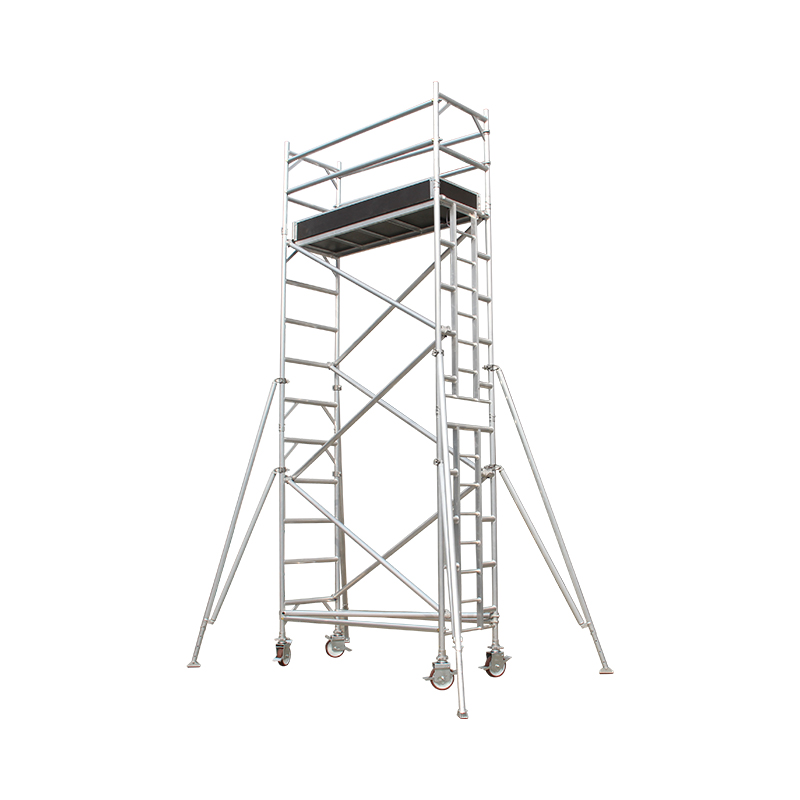
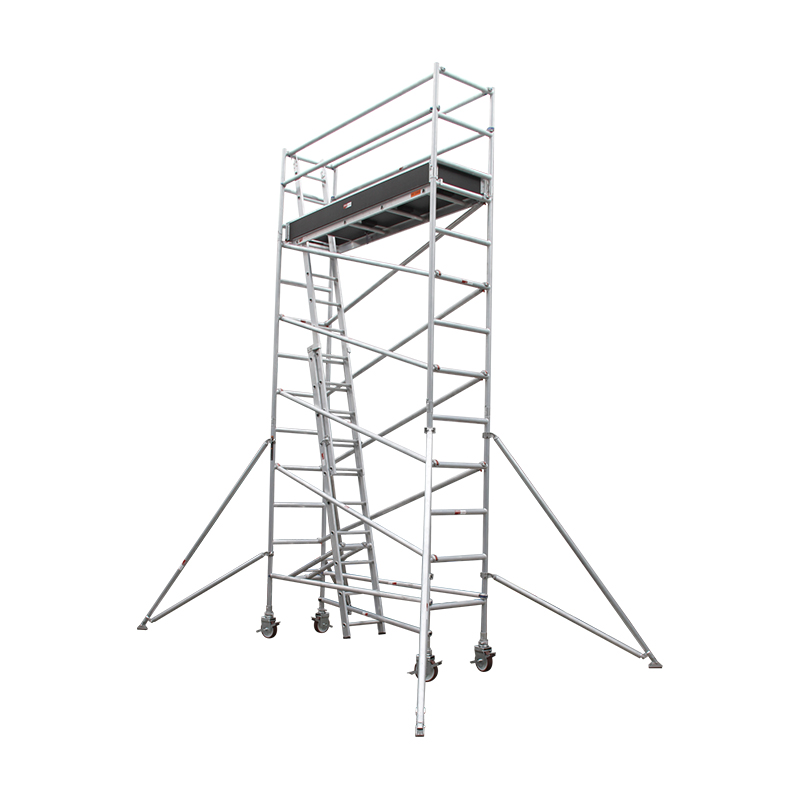
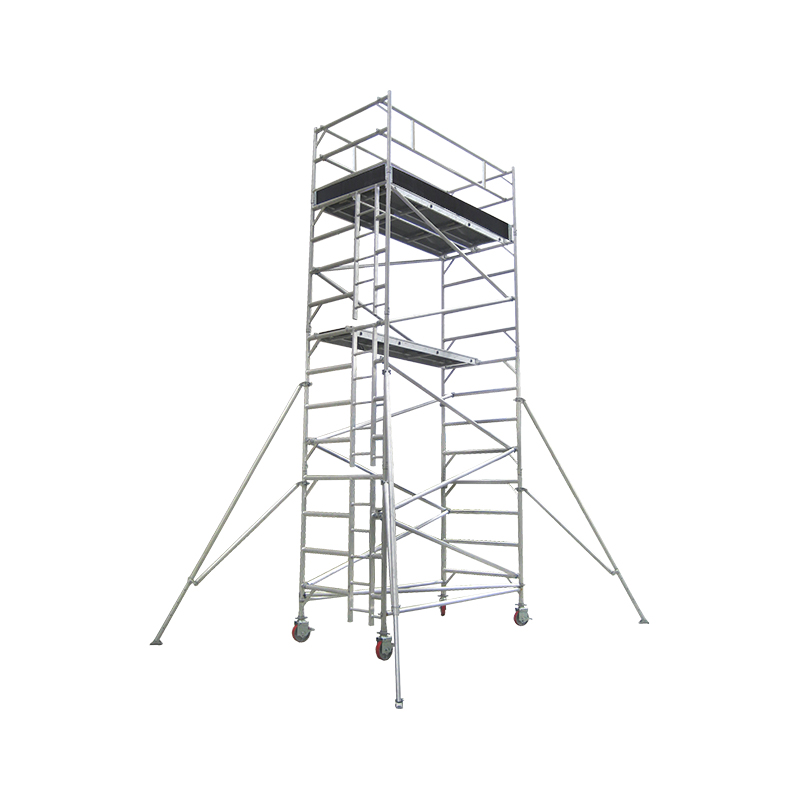
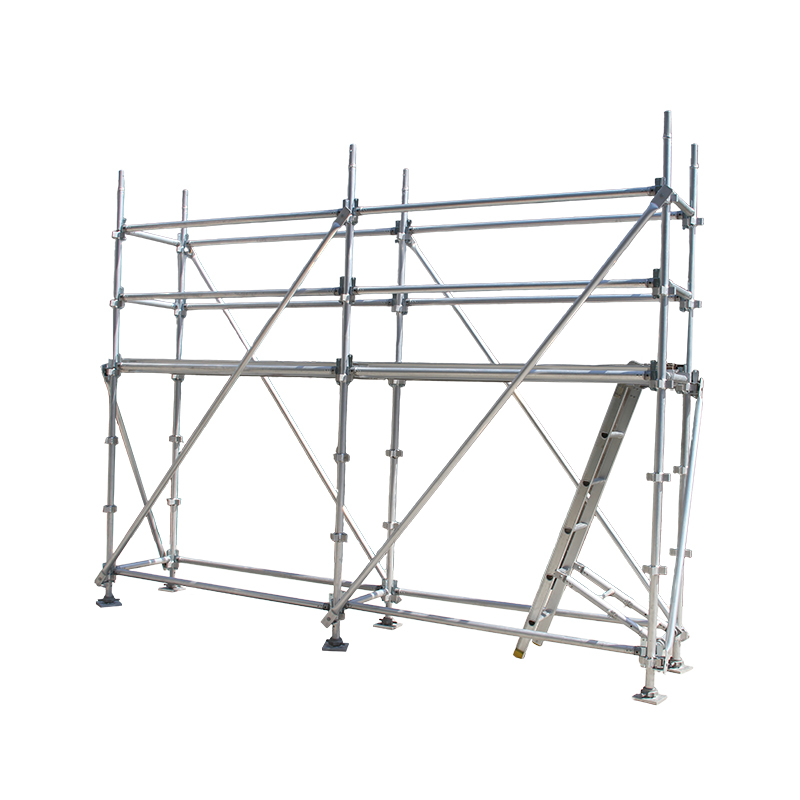
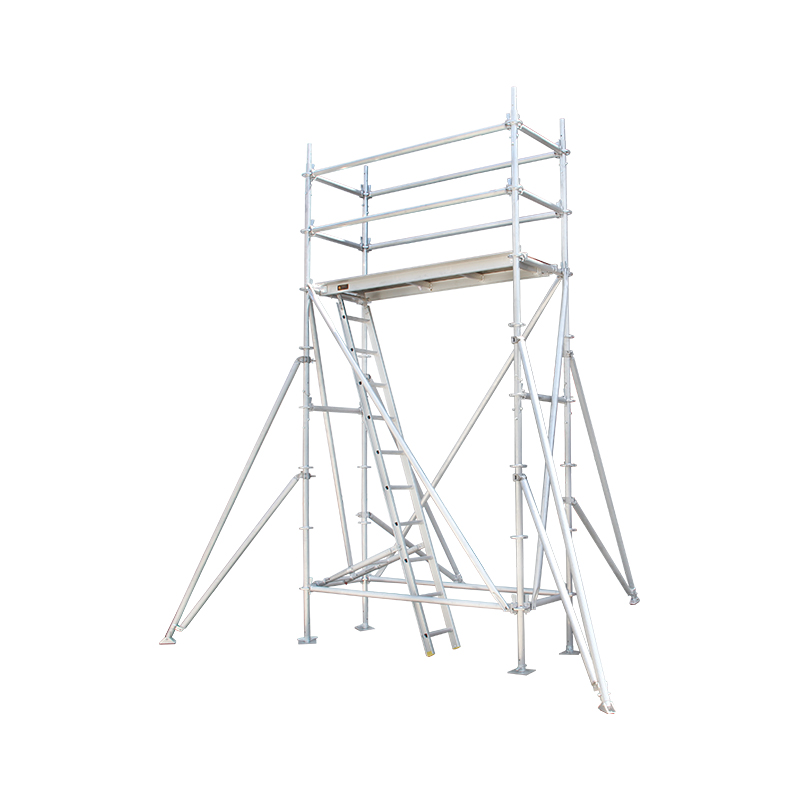
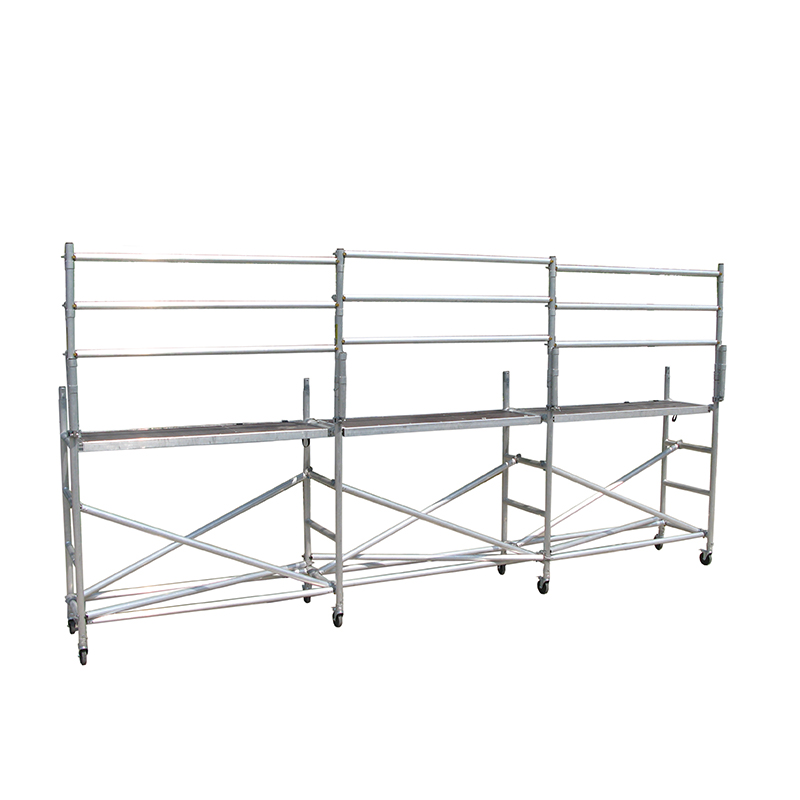

Caster Scaffolding Guide: How to Specify Mobile Aluminium Towers Safely
Content
- 1 What Caster Scaffolding Actually Solves
- 2 The Caster Is the Most Under-Specified Part of the Order
- 3 Platform Width, Working Height and the Real Capacity Limit
- 4 Where Caster Scaffolding Earns Its Cost
- 5 Setup and Pre-Use Routine That Keeps a Rolling Tower Safe
- 6 Choosing Between Single-Width, Double-Width and Folding Towers
- 7 When a Catalogue Tower Is Not Enough
A maintenance team finishes a valve change on a mezzanine and then needs the same tower three bays further down the aisle. A bolted frame means four people stop working and rebuild; a tower on casters means one person releases the brakes and rolls it into the next position. That single difference, wheels instead of fixed feet, is what caster scaffolding is built around, and it is also where most specification mistakes begin. Casters are not an accessory bolted onto a standard tower after the fact. They change the load path, the stability envelope and the pre-use inspection routine. Specified properly, one aluminium tower can serve an entire production floor. Specified badly, the tower becomes the least stable piece of equipment in the building.
What Caster Scaffolding Actually Solves
The short answer is mobility during repositioning, not mobility during work. A caster-mounted aluminium tower is designed to be pushed empty, or with tools and materials only, then locked down and climbed. Anyone who treats it as a rolling workbench has misread the product category entirely.
The saving is easy to picture. A fixed tower has to be dismantled, carried, and rebuilt for every new work position, which realistically costs fifteen to thirty minutes with two people. Move it five times a day and an hour of labour disappears before any actual work starts. A caster tower collapses that into twenty seconds of walking and lever pressing.
The cost of that convenience is structural. Four small wheels concentrate the entire tower load onto four contact patches only a few centimetres across, and they raise the working platform by the height of the caster assembly. Load now travels a longer path: deck to frame to coupling to caster to floor. Any weak link in that chain, an unseated spigot, a worn brake pad, a soft floor joint, undermines the whole assembly. That is why caster scaffolding rewards buyers who read the specification instead of the price list.
Aluminium matters here too. A comparable steel tower is roughly forty percent heavier, which is exactly the difference between one person rolling a tower across a workshop and two people deciding it is not worth moving at all.
The Caster Is the Most Under-Specified Part of the Order
Buyers spend hours comparing platform heights and deck widths, then accept whatever wheel the supplier includes. The wheel determines whether the tower rolls smoothly, tracks straight, stops reliably and survives the floor it lives on.
Wheel Diameter, Tread and Floor Surface
A 100 mm hard nylon wheel glides across smooth sealed concrete and jams solid on an expansion joint, a cable duct cover or a tiled threshold. Wheels between 125 mm and 200 mm roll over most small obstacles and handle slightly rough concrete with far less effort. Polyurethane and nylon treads offer low rolling resistance and long wear on finished floors, but they can skid on wet tile or polished stone. Rubber treads grip better on uneven and outdoor surfaces at the cost of noticeably higher push effort.
There is a trade-off hidden in diameter: bigger wheels raise the tower, which raises the centre of gravity and reduces the height at which the same tower becomes marginal. A 200 mm caster on a tower rated for a 5 m platform is not the same machine as the same tower on 100 mm casters.
Brakes and Locking Systems
Total-lock brakes, which lock both the rolling and the swivelling motion, should be treated as non-negotiable on any mobile tower. A wheel that only locks its roll still allows the tower to spin in place, which is the worst possible outcome for someone working four metres above the floor. Foot-operated pedal brakes beat hand-operated levers for a simple reason: workers actually use them, because both hands are already holding tools.
| Caster Type | Typical Wheel Diameter | Best Surface | Brake | Typical Application |
|---|---|---|---|---|
| Nylon or polyamide rigid | 100 to 125 mm | Smooth sealed concrete, epoxy floors | None or roll-only | Light indoor towers moved once or twice a shift |
| Polyurethane swivel | 125 to 150 mm | Sealed concrete, tile, warehouse flooring | Total lock | General workshop and warehouse maintenance |
| Rubber-tread swivel | 150 to 200 mm | Uneven concrete, outdoor paving, loading docks | Total lock | Site work and plant areas with surface gaps |
| Heavy-duty polyurethane with shock absorption | 200 mm | Expansion joints, ramps, mixed flooring | Total lock | High-load platforms repositioned frequently |
Platform Width, Working Height and the Real Capacity Limit
Width decides how much work a tower can carry, faster than height does. Single-width towers give a deck of roughly 0.75 m, which is enough for one person and a tool bag and narrow enough to pass an 800 mm doorway. Double-width towers run around 1.35 m, which allows two workers to pass each other or one worker plus panels and material.
The load rating on the label applies to the whole platform, not to each person standing on it. A tower rated at 200 kg with two 80 kg workers and 30 kg of tools is already at 190 kg, ten kilograms from its limit. Add a bucket of fixings and the tower is overloaded while it still looks perfectly normal from the ground.
Wind is the other invisible variable. A caster-mounted tower has no anchor to the structure, so outdoor use demands a plan for gusts, and any tower left in an exposed position overnight should be tied off or dismantled. A locked brake stops movement; it does not stop a tower tipping.
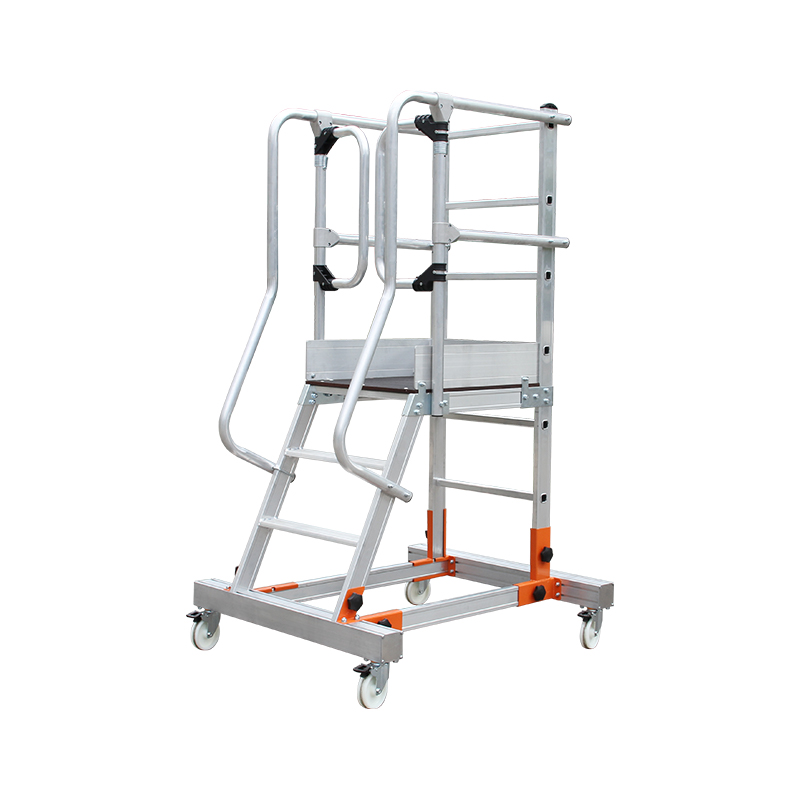
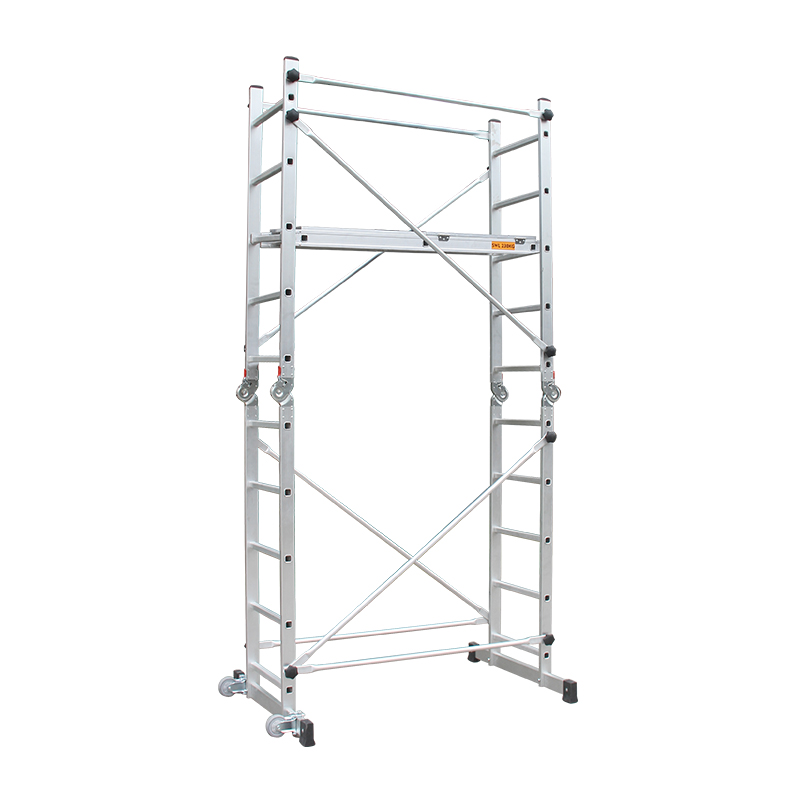
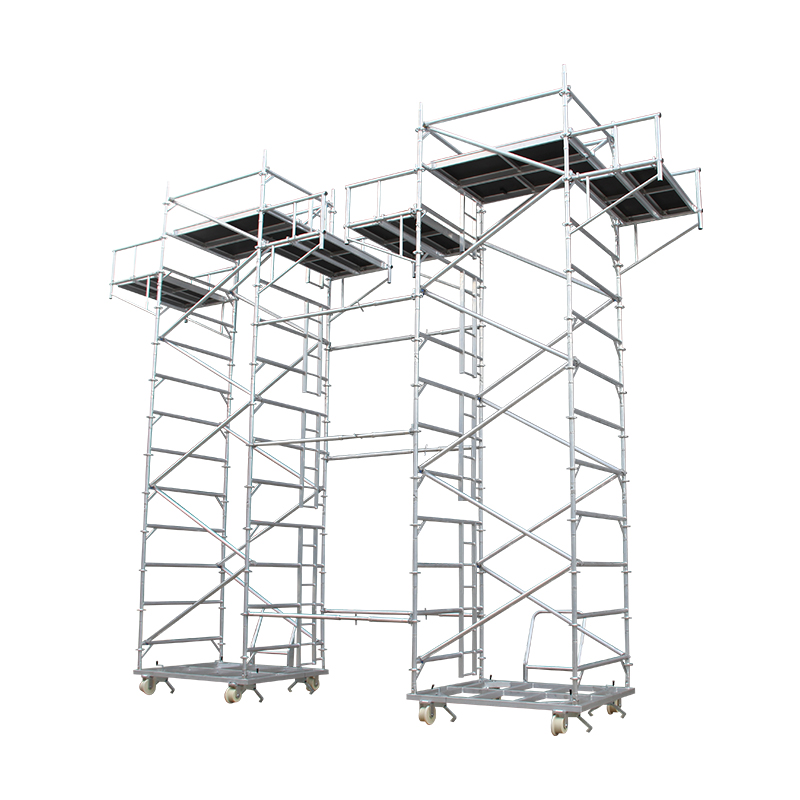
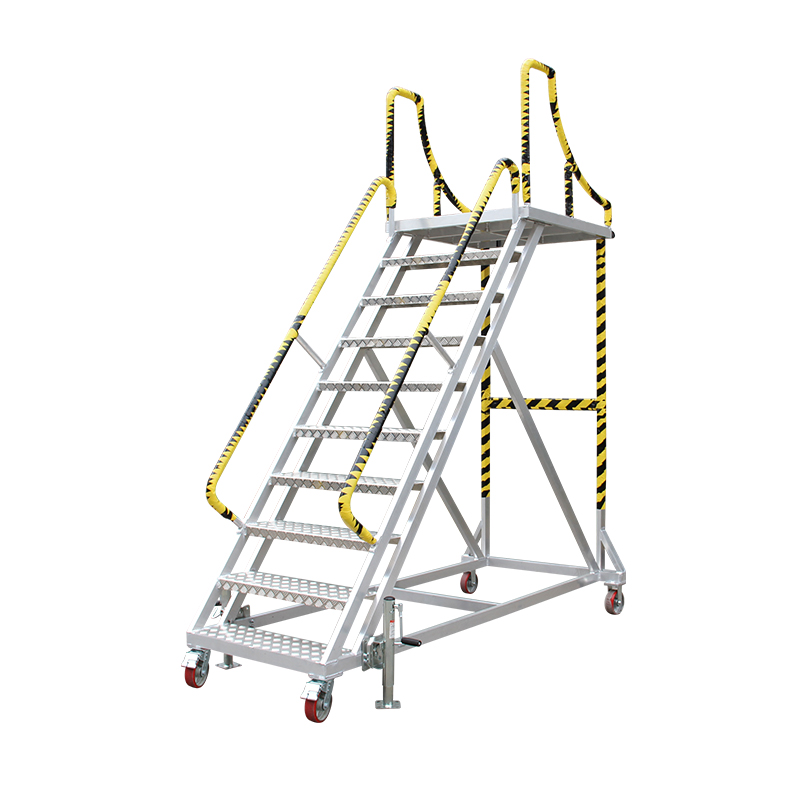
A double-width tower with an inclined ladder is the configuration most maintenance crews settle on when two people need to work together and the climbing route must not eat into the standing area of the deck.
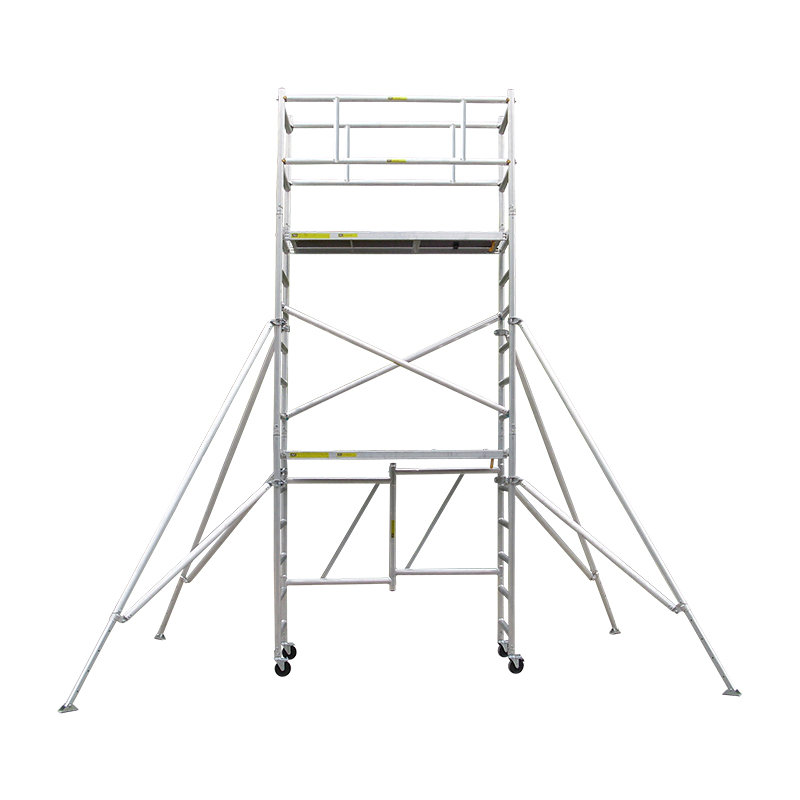
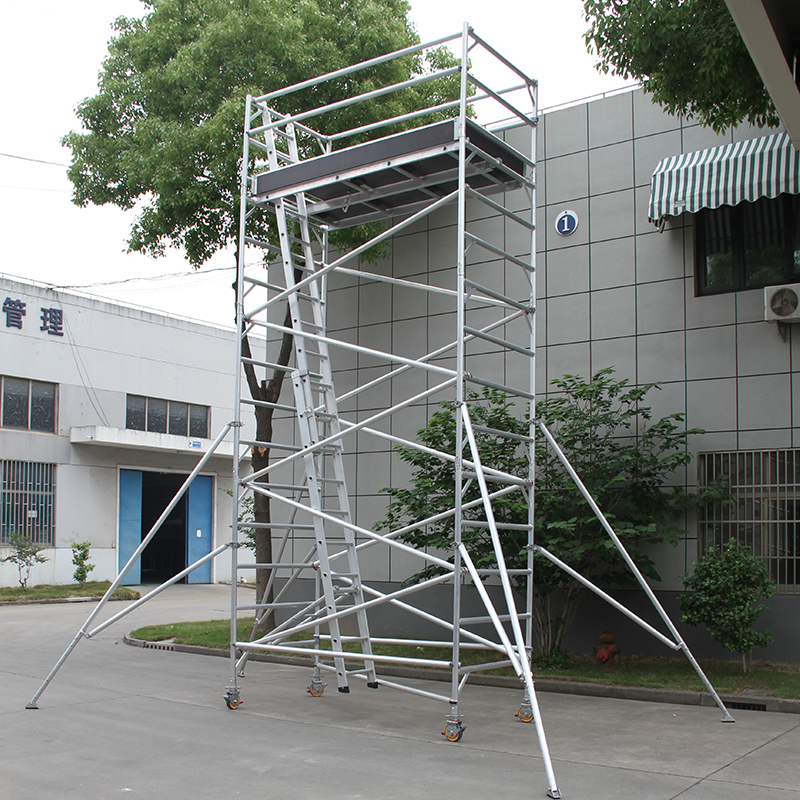 Double Width Aluminium Mobile Scaffold with Inclined LadderAluminium mobile tower with double-width platform and inclined ladder, suited to maintenance work where two people need stable elevated access.View Product →
Where Caster Scaffolding Earns Its Cost
Warehouses with racking above 4 m are the classic case. Order pickers move between aisles dozens of times a shift, and a tower that follows them beats a tower that has to be rebuilt. Factory maintenance is close behind: pumps, motors, valves and overhead conveyors are spread across one large floor, and the work position changes far more often than the work itself.
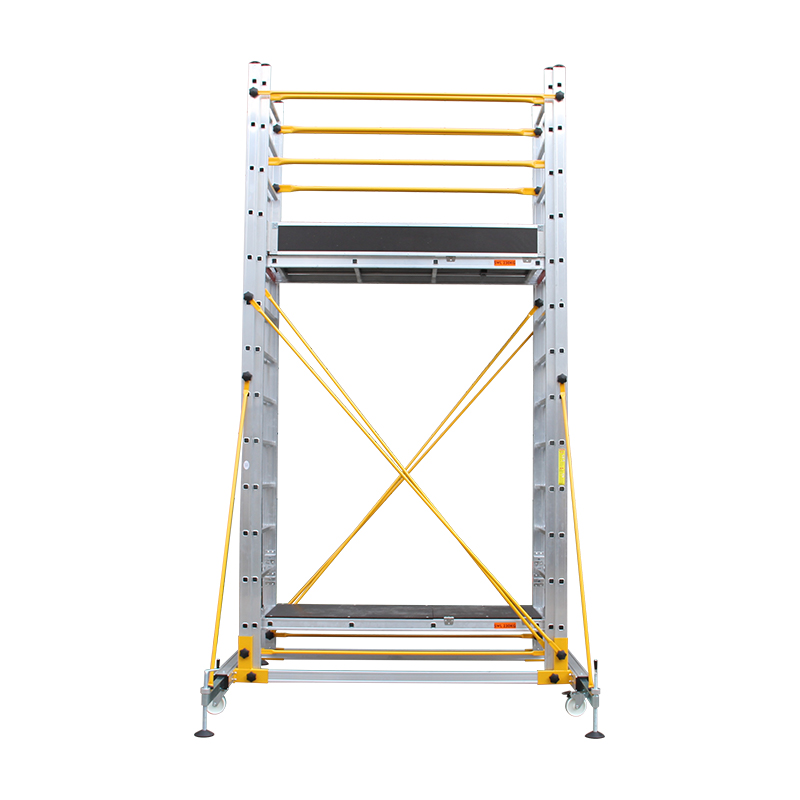
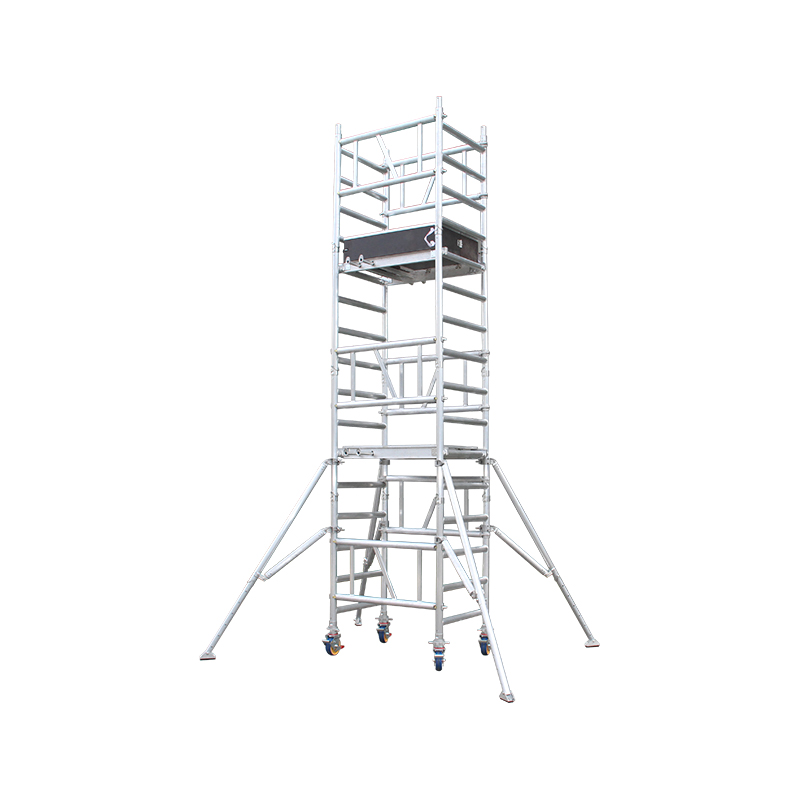
Low-clearance interiors are a separate scenario. When the ceiling sits below 4 m and equipment bases block a full-size footprint, a compact mini tower on casters fits where a full tower cannot be assembled at all. Smaller decks, narrower bases and lighter frames let it roll under pipework and between machine guards.
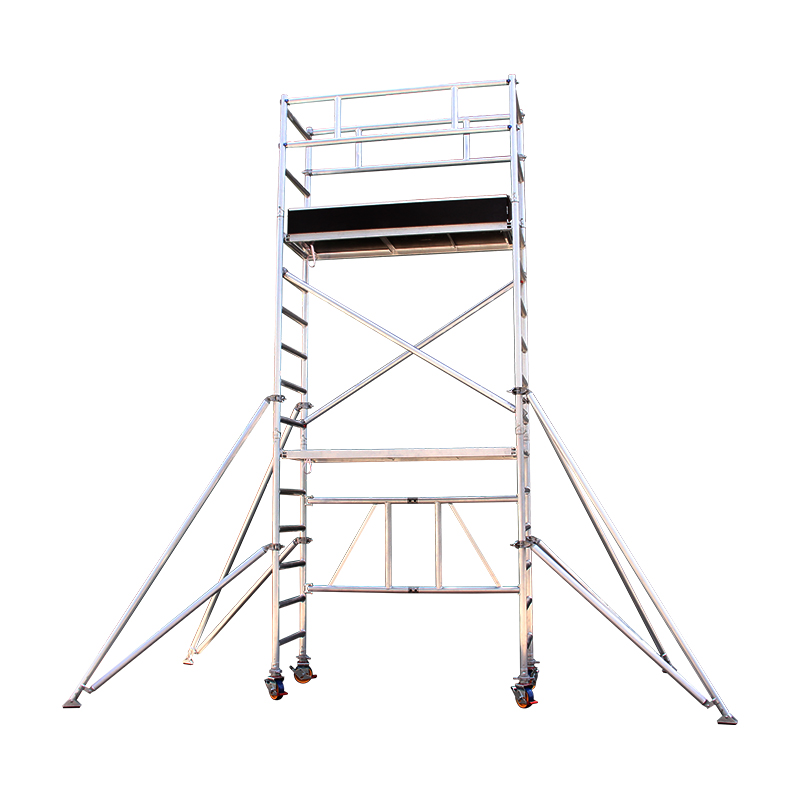
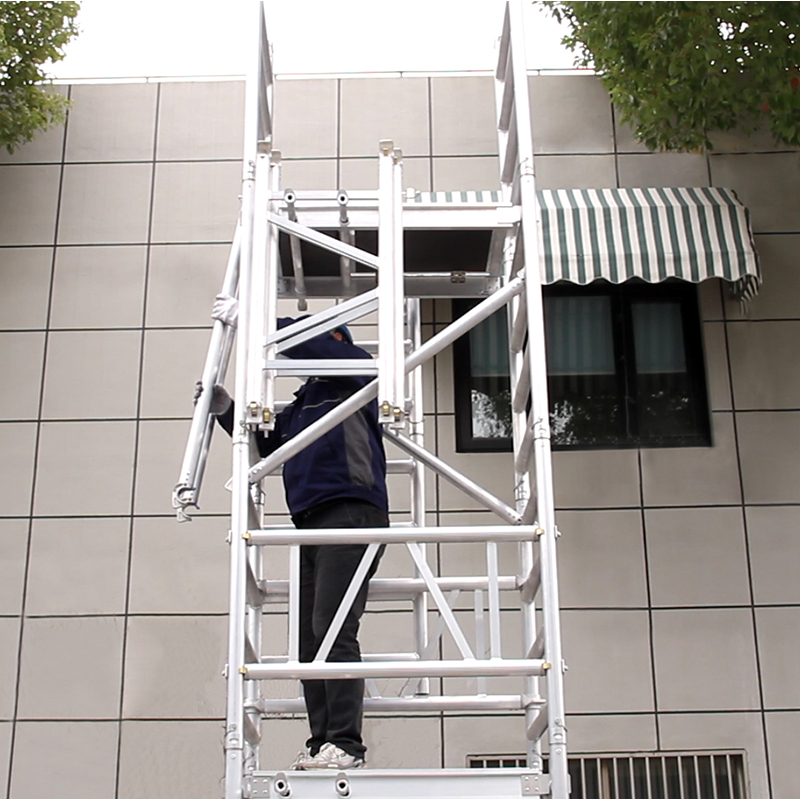 Compact Aluminium Mini Tower Mobile Scaffold on CastersLightweight aluminium mini tower on casters for low-clearance indoor access and confined areas, with one-person assembly and compact rolling transport.View Product →
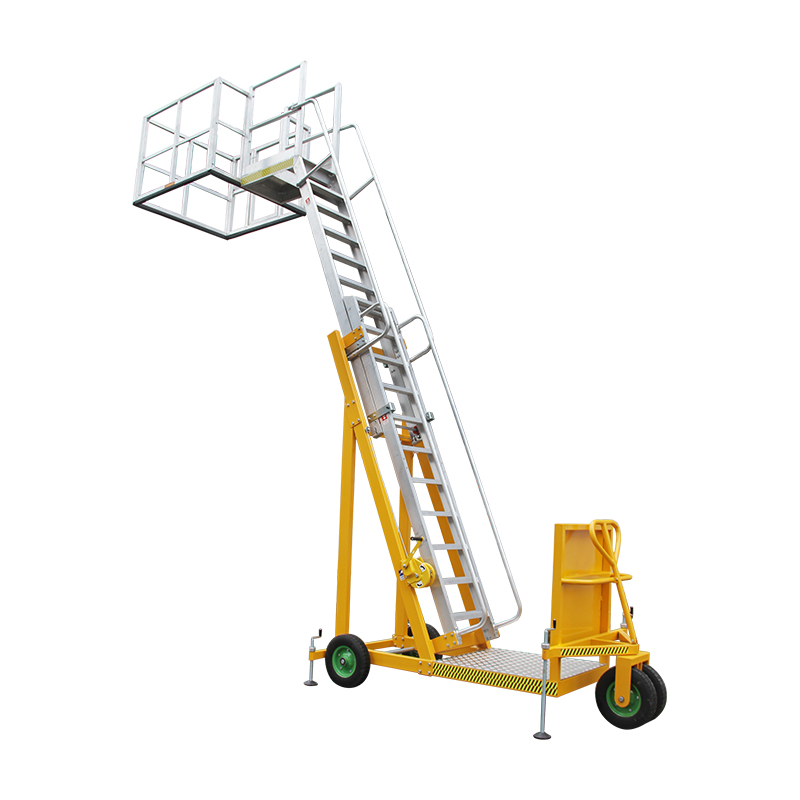
Aviation ground handling and rail maintenance follow the same logic but with tighter discipline. Boarding platforms, boarding ladders and catenary access units are repositioned along a stand or a track section, and the caster assembly is usually matched to level ground or to a prepared rail surface rather than to general construction terrain.
Setup and Pre-Use Routine That Keeps a Rolling Tower Safe
A tower on wheels fails in predictable ways, and almost all of them are caught before anyone climbs. The sequence below takes under two minutes and covers the failures that actually occur.
- Clear the travel path first. Cables, offcuts, floor drains and door thresholds are what snag a caster and tip a tower sideways.
- Check every brake individually before moving. A single failed brake on a four-caster tower removes a quarter of the stopping force.
- Assemble the tower on level ground with casters already fitted, never lift a partially built frame onto wheels.
- Move the tower with all brakes released, at walking speed, and preferably with a second person guiding at the base if the route turns.
- Lock all four brakes once the tower is in position, then test it by pushing at the base before climbing.
- Check verticality against a plumb line or the frame reference marks. Casters exaggerate any floor fall, so the tower that looked upright during assembly may lean once it is rolled.
- Check wind and weather before any outdoor use, and shorten the working period rather than the safety margin if conditions are uncertain.
Guardrails, toe boards and outriggers stay relevant on a rolling tower. Casters add a failure mode; they do not remove any of the existing ones.
Choosing Between Single-Width, Double-Width and Folding Towers
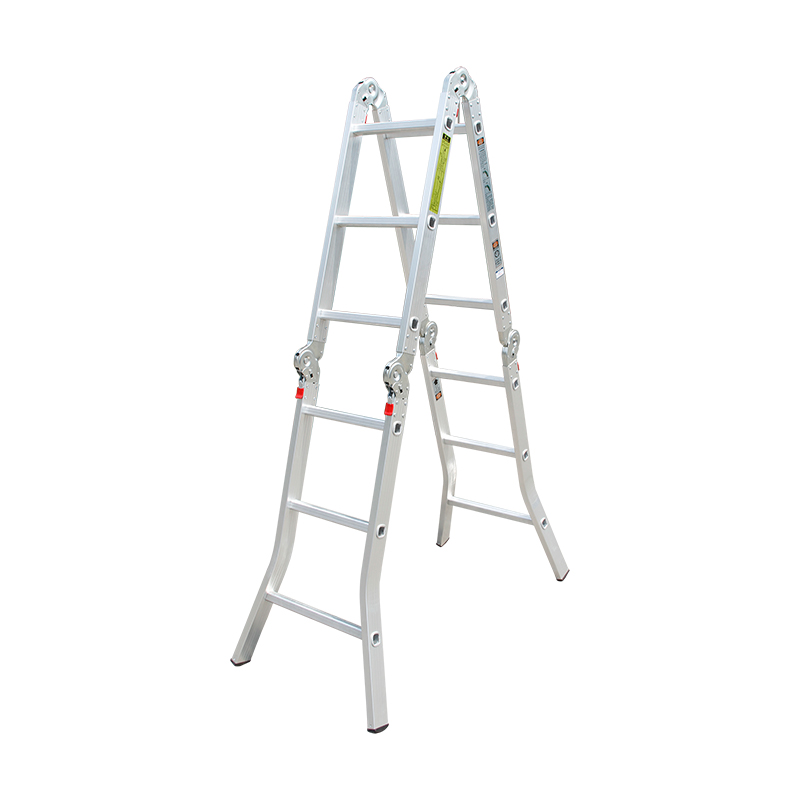
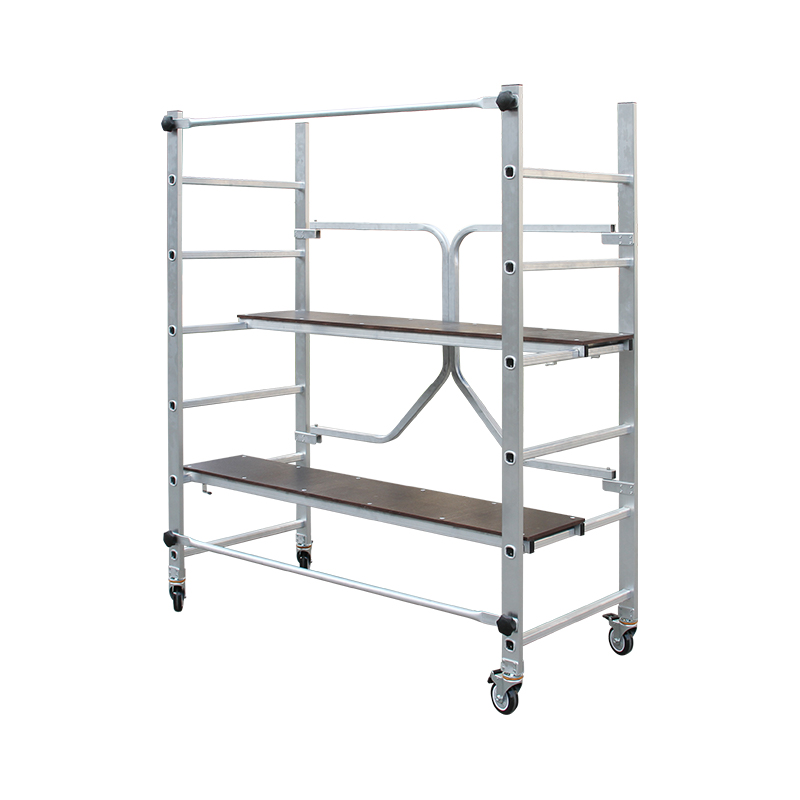
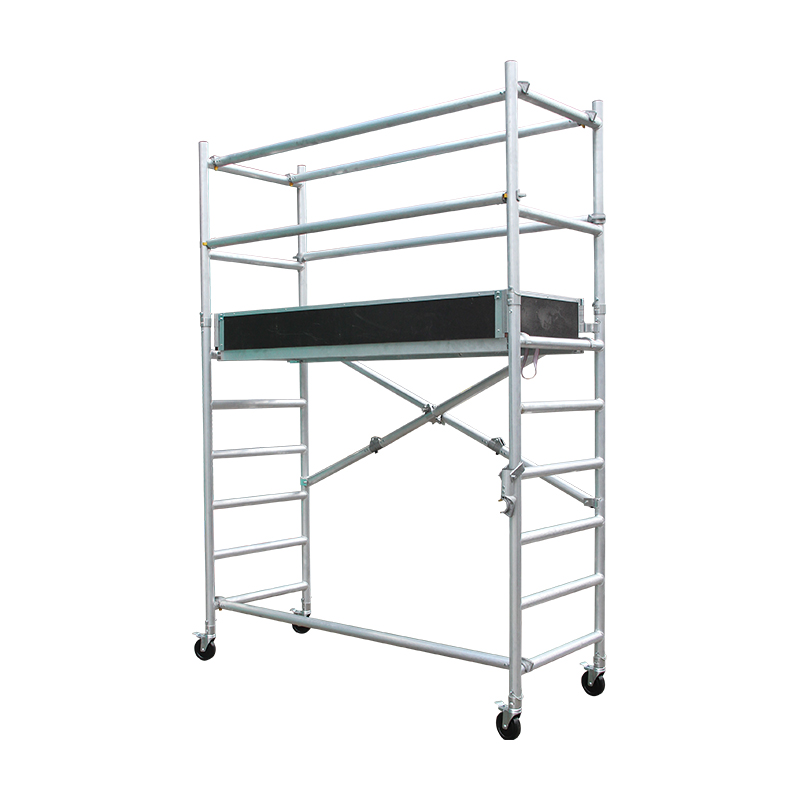
Standard single-width towers win on access and price, and suit one worker with light tools. Double-width towers carry two workers or material and are the more productive choice where the budget and floor space allow. Folding towers occupy a different niche: a folded H-type frame transports as a compact unit and opens into a working tower in minutes, which suits contractors moving between sites, and maintenance teams who cannot leave equipment standing between jobs.
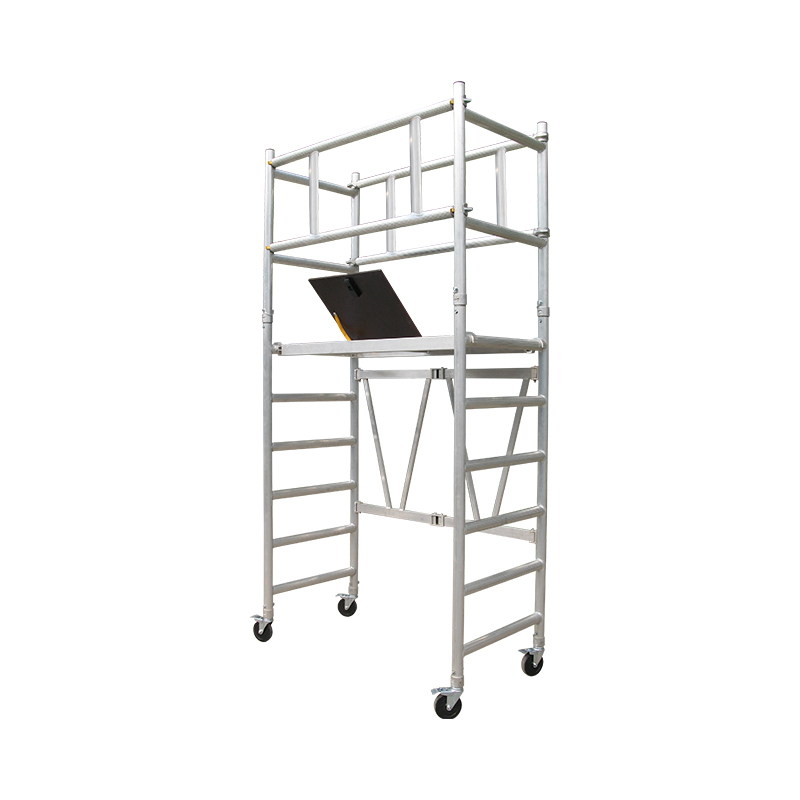
 Folding Aluminium Mobile Scaffold H-Type TowerFoldable H-type aluminium tower that transports as a compact unit and opens quickly for indoor maintenance and jobs where equipment cannot stay standing.View Product →
Foldable frames also solve a storage problem. A tower that has to be broken down and stacked in a corner each evening rarely gets used twice in the same week. One that folds and rolls into a service bay gets used daily.
For a structured comparison of platform widths, climbing routes and typical applications across the whole range, the site's overview of aluminium mobile scaffolding types is a useful starting point before narrowing the choice to a specific frame.
When a Catalogue Tower Is Not Enough
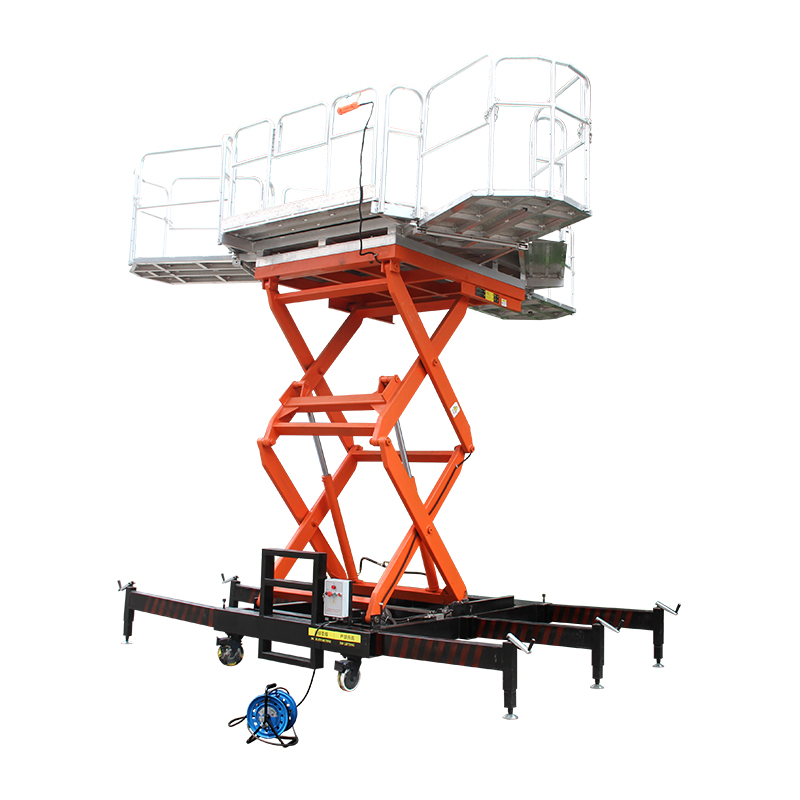
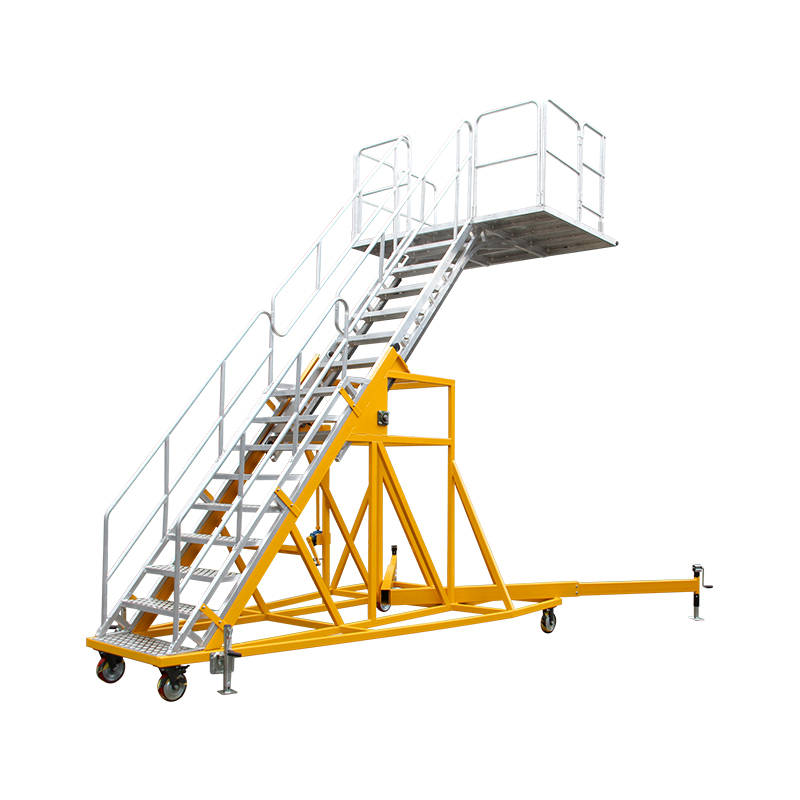
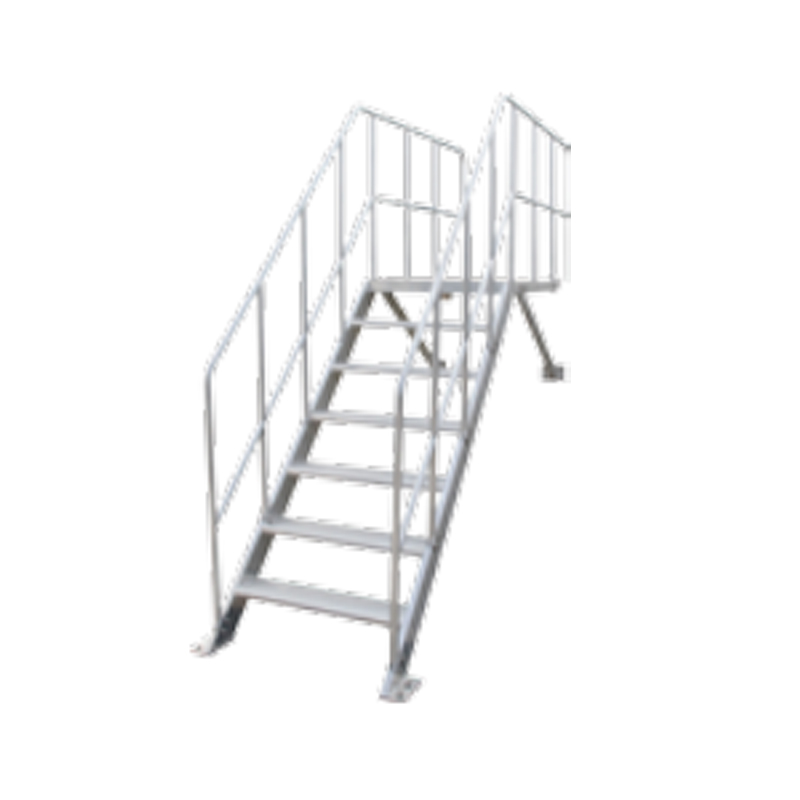
Standard mobile towers stop being the answer as soon as the access point itself is non-standard. A plant staircase that has to double as a maintenance route, a rail vehicle that needs a working deck at a fixed height above the rail head, an aircraft stand requiring a boarding unit at a specific door sill height: none of these are covered by a stock frame with casters bolted underneath.
This is where fabrication capability matters more than catalogue depth. What a buyer should ask for is a defined working height, a stated platform load, a floor or track interface, and a caster specification confirmed against the actual surface, plus drawings that show how the tower is locked or restrained in its working position. Custom fabrication work of this kind is a design exercise, not a parts order, and it is worth treating the quotation stage as the point where the real engineering happens.
The same discipline applies to standard products. Specify the wheel by floor and duty, state the load including tools, confirm the platform width against the narrowest doorway on the route, and decide before delivery who is responsible for inspecting brakes. Those four answers cost nothing at the quotation stage and prevent the expensive version of the same conversation later.
Caster scaffolding is a trade: mobility purchased with a slightly narrower margin of stability. Buyers who match wheel diameter and brake type to the actual floor, keep the load rating in mind when tools are added, and treat locking and inspection as part of the routine get a tower that replaces three fixed ones. Buyers who treat the wheels as a detail get a tower that quietly becomes the riskiest thing on the site.
- Aluminium Mobile Scaffolding: Guide to Types, Uses & Benefits View more
- Aluminium Mobile Scaffolding: Types, Load Ratings, Safety, and Buyer's Guide View more
- Aluminium Step Ladder: Guide to Safety, Types & Applications View more
- Aluminium Platform Ladder Guide: Safety, Types & Buying Tips View more
For project inquiries, fill in the form or contact us directly—our team responds promptly.

Copyright @ Shanghai Ruiju Metal Products Co.,Ltd. All rights reserved Aluminum Scaffolding Suppliers Aluminium Ladder Manufacturers
