en
en 简体中文
简体中文 Español
 Deutsch
 عربى
عربى












Cage Ladder Design: Why Enclosure Geometry Matters
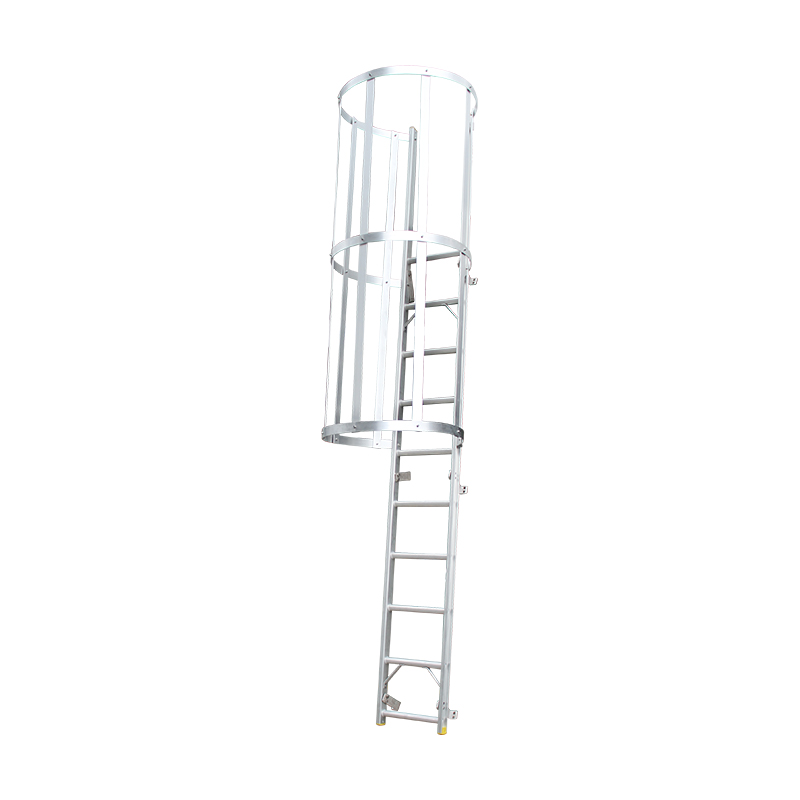
For industrial access systems, the cage surrounding a Cage Ladder is not simply an added visual feature. Its geometry, attachment points and relationship with the climbing line need to be considered as part of the overall access design. Cage diameter, vertical clearance, opening arrangement and structural connections can influence how personnel enter, climb and exit the ladder. These details become particularly important for fixed access routes serving tanks, platforms, rooftops, towers and industrial structures.
Shanghai Ruiju Metal Products Co., Ltd. has specialized in customized climbing and working-at-height solutions since 2001. Operating from a 12,000 m² self-owned production facility, the company integrates R&D, product design, manufacturing and marketing, with products covering ladders, aluminium scaffolding systems, work platforms and related equipment. Ruiju has more than 30 years of expertise in working-at-height products and technologies and continues to develop solutions for domestic and international markets.
Key Cage Dimensions to Define
- Cage projection from the climbing face and usable internal clearance.
- Vertical spacing and arrangement of cage hoops or members.
- Position and size of access openings at platforms or intermediate levels.
- Connection locations between the cage and ladder structure.
- Clearance from adjacent walls, pipes, machinery and structural members.
Cage Ladder Planning Around Industrial Structures
A fixed Cage Ladder is normally integrated with an existing structure, which means the surrounding installation conditions can be as important as the ladder itself. Tanks, silos, building facades, towers and production equipment may have irregular surfaces or restricted access zones. Before manufacturing, technical teams should establish the mounting surface, ladder offset, access height and location of nearby obstacles.
For retrofit projects, site measurements should be combined with photographs or engineering drawings wherever possible. This allows the manufacturer to understand the relationship between the ladder, cage, mounting brackets and existing structure. Accurate dimensional information is especially useful when several fixed access points have different elevations or structural conditions.
| Installation Factor | Why It Matters | Information to Confirm |
|---|---|---|
| Mounting surface | Determines bracket arrangement | Wall, tank, tower or structural frame type |
| Ladder height | Defines the access route | Lower and upper access elevations |
| Cage clearance | Affects climbing space | Required internal and external clearance |
| Nearby equipment | May restrict access geometry | Pipes, ducts, platforms and machinery |
| Landing interface | Controls entry and exit arrangement | Platform position and access direction |
Material Selection for Long-Term Outdoor Access
Material selection for a Cage Ladder should account for both structural requirements and the environment in which the access system will remain installed. Aluminium is frequently used in working-at-height equipment where low structural weight can support transportation, handling and installation. However, the ladder rails, rungs, cage members, brackets and fasteners should be treated as an integrated system rather than selecting each component independently.
Outdoor installations can experience moisture, temperature variation, airborne contaminants and prolonged exposure to weather. Industrial environments may introduce additional conditions such as dust, oils or process residues. These factors should be communicated before production so that appropriate materials, finishes and component combinations can be considered for the intended service environment.
Environmental Data Useful for Specification
- Indoor, outdoor or semi-outdoor installation conditions.
- Expected humidity, rain or condensation exposure.
- Presence of industrial dust, oils or chemical contaminants.
- Expected service frequency and maintenance access requirements.
- Destination-market material and compliance requirements.
Modular Cage Sections for Large Industrial Projects
For tall structures, transporting and installing one continuous ladder assembly may be impractical. A modular Cage Ladder can be divided into manageable sections, allowing manufacturing, transportation and installation to be planned around the dimensions of the site. Section interfaces then become an important engineering consideration because adjacent ladder and cage components need to align correctly after assembly.
Modular design can also simplify project documentation. Individual sections can be identified according to installation position, making it easier for site teams to verify components during delivery and assembly. For projects with multiple towers or similar structures, consistent module dimensions can additionally support standardized production and installation procedures.
Information for Modular Ladder Planning
- Total ladder height and proposed section lengths.
- Joint locations and connection requirements.
- Transportation and lifting limitations at the installation site.
- Access openings and platform interfaces.
- Identification requirements for individual sections.
Access Openings Need to Be Considered With the Cage
The transition between a Cage Ladder and an elevated platform is an important part of the overall access route. The upper termination should be coordinated with the landing arrangement, surrounding guardrails and available clearance. If the access opening is designed independently from the cage geometry, installation conflicts can occur when the ladder reaches an existing platform or structural member.
For engineering projects, the access direction should be identified before fabrication. Drawings can indicate the ladder centerline, platform edge, opening position and surrounding structures. This provides a practical reference for both manufacturing and on-site installation and helps ensure that the finished assembly corresponds with the intended access path.
Inspection of Cage and Structural Connections
A fixed Cage Ladder should be incorporated into the facility's regular inspection program. Maintenance personnel can examine ladder rails, rungs, cage members, mounting brackets, fasteners and access interfaces for visible deformation, looseness, cracking, abnormal wear or other damage. Because the cage contains multiple connected members, inspection should cover the connections as well as the individual components.
For outdoor installations, inspection should also consider environmental exposure and the condition of surfaces and connection areas. Any unusual structural change should be documented and evaluated according to the manufacturer's maintenance requirements and applicable local regulations before the equipment is returned to normal service.
Useful Inspection Records
- Ladder model, identification and installation location.
- Condition of rails and climbing rungs.
- Condition and attachment of cage members.
- Condition of brackets, fasteners and structural interfaces.
- Inspection date, findings and corrective actions.
Ruiju's Approach to Customized Cage Ladder Manufacturing
Shanghai Ruiju Metal Products Co., Ltd. operates an ISO 9001-certified manufacturing system and is BSCI audited. Its standard products comply with China's national standard GB12142, while export products meet applicable Australian, European and American industry standards. Products are rigorously tested and certified by SGS and TÜV, supporting independent third-party verification for relevant market requirements.
Under the Ruiju brand, the company operates a 12,000 m² self-owned production facility with an integrated system covering R&D, product design, manufacturing and marketing. With more than 30 years of experience in working-at-height products and technologies and a portfolio of technical patents, Ruiju continues to develop ladders, aluminium scaffolding systems, work platforms and related equipment for professional applications.
For customers specifying a Cage Ladder, useful project information includes total access height, mounting surface, ladder offset, cage dimensions, platform interfaces, surrounding obstacles, environmental conditions, expected loading and destination-market standards. Shanghai Ruiju Metal Products Co., Ltd. can incorporate these engineering inputs into product design and manufacturing, supporting customized fixed access solutions for tanks, towers, platforms, buildings and other industrial structures.